Anti-Inflammatory Meal Plan
Delicious meals built around color, fiber, and healthy fats.
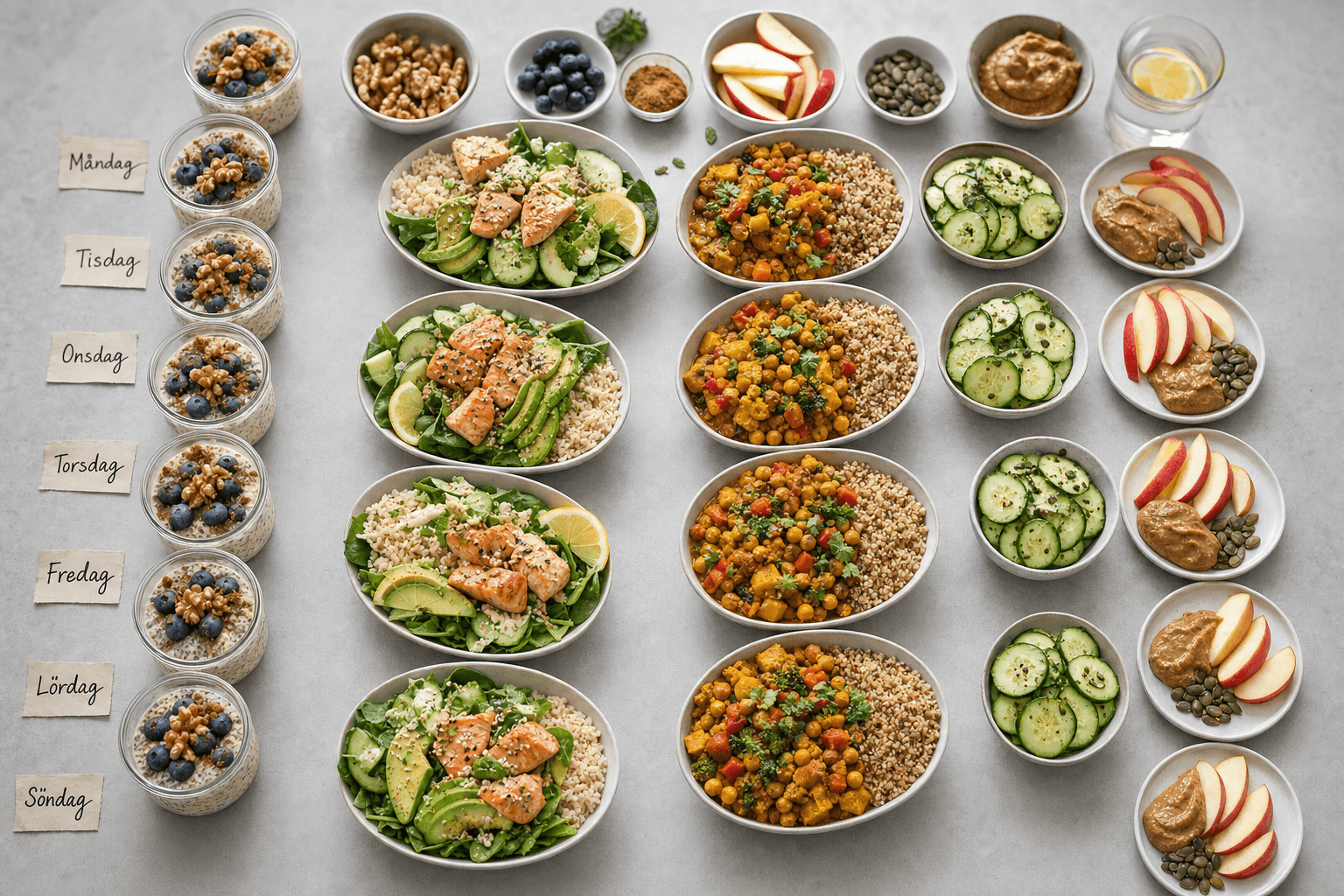
This meal plan focuses on foods commonly associated with a lower-inflammatory eating pattern: vegetables, fruit, beans, whole grains, fatty fish, nuts, seeds, olive oil, and herbs and spices.
It’s designed to be practical, satisfying, and easy to repeat. You’ll get balanced meals with protein, slow-digesting carbs, and plenty of produce — without relying on extreme rules or hard-to-find ingredients.
Why this plan works
Built around nutrient-dense foods
Each meal emphasizes foods like salmon, lentils, berries, leafy greens, and extra-virgin olive oil — ingredients that fit naturally into an anti-inflammatory pattern.
Stable, balanced meals
Protein, fiber, and healthy fats help keep meals satisfying and support steadier energy through the day, which can make the plan easier to stick with.
Simple ingredients, real-life cooking
The recipes and meal ideas use everyday grocery items and straightforward techniques, so you can shop and cook without a lot of extra effort.
Flexible for different needs
You can adapt this plan for vegetarian eating, higher protein goals, or gluten-free preferences by swapping in equally nourishing ingredients.
Sample day of anti-inflammatory meals
- Breakfast
- Overnight oats with chia seeds, blueberries, walnuts, and cinnamon
- Lunch
- Salmon grain bowl with brown rice, cucumber, spinach, avocado, and lemon-tahini dressing
- Dinner
- Turmeric chickpea and vegetable stew with quinoa and parsley
- Snack
- Apple slices with almond butter and a handful of pumpkin seeds
Every plan is generated fresh for your household, portions, and dislikes — this is just a taste.
Frequently asked questions
What makes a meal plan anti-inflammatory?
It’s based on a pattern that emphasizes vegetables, fruit, legumes, whole grains, nuts, seeds, fish, and unsaturated fats, while limiting highly processed foods and added sugars.
Can this meal plan help with inflammation-related symptoms?
Many people choose anti-inflammatory eating to support overall wellness, but results vary. It’s not a treatment plan, and it’s best used alongside medical advice if you have a health condition.
Do I need to cut out all dairy, gluten, or nightshades?
No. Those eliminations are not required for an anti-inflammatory pattern. If you personally notice certain foods don’t agree with you, you can adjust the plan accordingly.
Is this plan suitable for vegetarians?
Yes, with a few swaps. Beans, lentils, tofu, tempeh, edamame, eggs, yogurt, and nuts can all provide protein in place of fish or poultry.
How do I keep meals interesting?
Rotate colors and textures: try different vegetables, seasonal fruit, herbs, spices like turmeric and ginger, and sauces based on olive oil, citrus, yogurt, or tahini.
Build your plan in seconds
Tell Meal Planner your household, tastes, and any allergies. You'll get a full week, a sorted shopping list, and step-by-step recipes — free to start.
Get started free